
Elevation Gain: 2,247m
Distance: 20.5km
Total Time: 13 hours 3 minutes
Date: July 19th, 2026
Slesse is summit that needs no introduction. If you’ve driven from Vancouver to Hope on a clear day, the craggy towers of Slesse will be visible high above the Fraser Valley. This summit is rather rare around southwest BC in that, there’s no non-technical route to reach the summit. The easiest route is 5.6, but if you’re a climber you’re most likely gunning for the ultra famous Northeast Buttress. I fell into that camp and for the longest time I had planned to climb it via that route. However, time passed on and eventually some friends got around to climbing it and reported back mediocre rock and climbing. It’s a long and committing route and there’s usually multiple parties and rockfall to contend with as well. After hearing lacklustre reviews I sort of wrote it off.
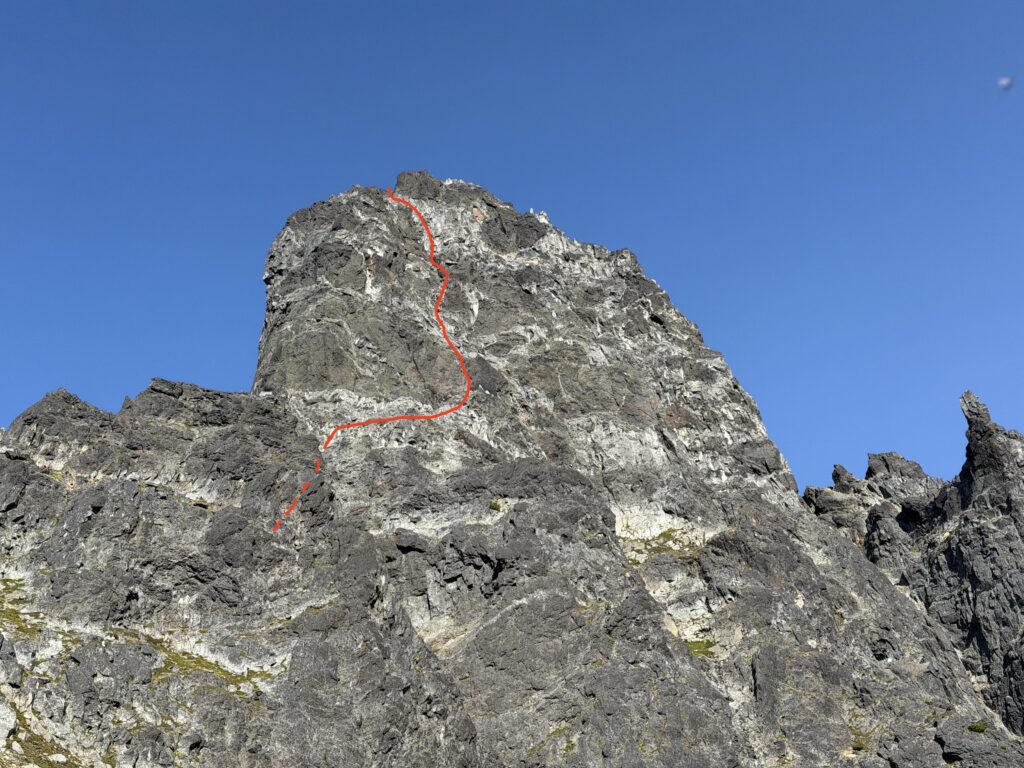
Now the summer had arrived and I was ready for an alpine climb of some sorts. Alex and I were discussing a few ideas and eventually Slesse came into the fold. He was in the same camp as me and we both wanted to do something else. Trevor joined in to the plans shortly after and we all decided on the NW Arete. It’s really the last 6 pitches of the NW Rib, but seemed to offer a funner way to reach the summit without a huge commitment required. The only problem is that the route had really no description at all in the Kevin McLane guidebook. There’s certainly a balance between leaving some adventure and giving some clues, but the guidebook misses the mark on this one. In any event, we resolved to giving it a try and worst case we could bail and do the standard 5.6 route.
We came equipped that weekend with e-bikes in case the Slesse Creek FSR was closed, but we never encountered a locked gate and made it to the first wash out without issue. Since we already brought the bikes we elected to try and bike at least some part of the remainder, but we gave up after only 600m of endless blockages on the road. With that we pressed on by foot and up through very overgrown road bed for 5km. The trail was easy to spot from the road and it quickly transitioned form fern tunnel to open, unlogged forest.
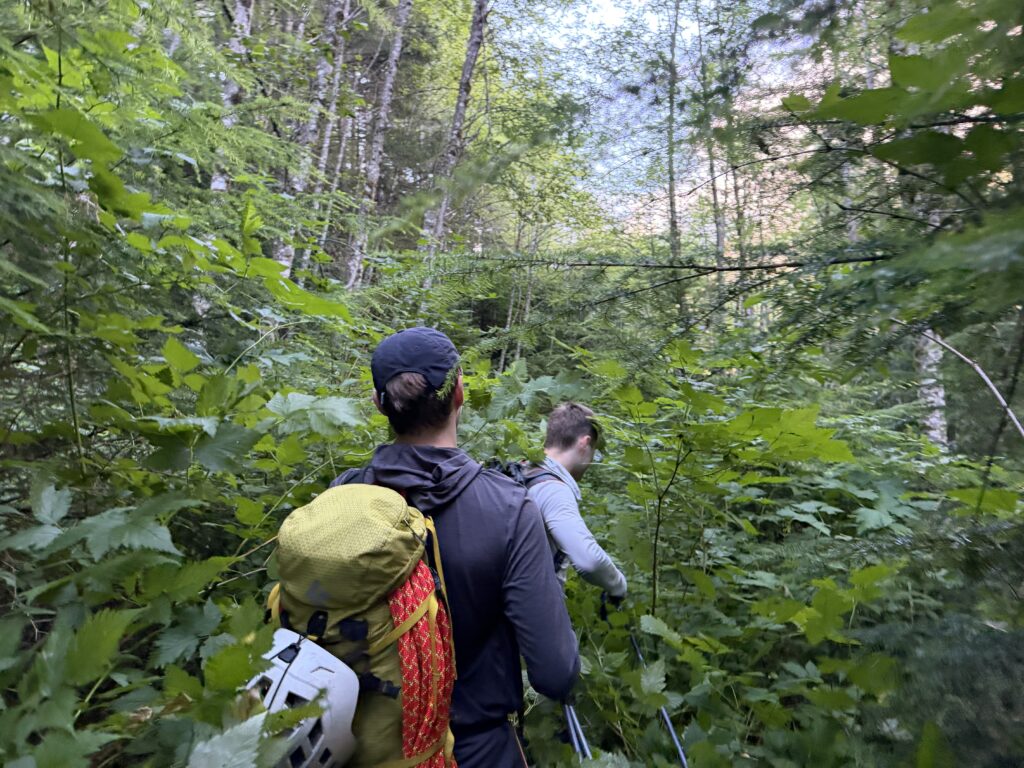
The approach trail was steep, but not egregious and the air was filled with the usual discussions about AI ramifications in our respected jobs. Before we knew it we’d arrived above treeline with great views of the route ahead. From our initial perspective, the NW Arete was not particularly obvious, but we’d have to get up close to see.
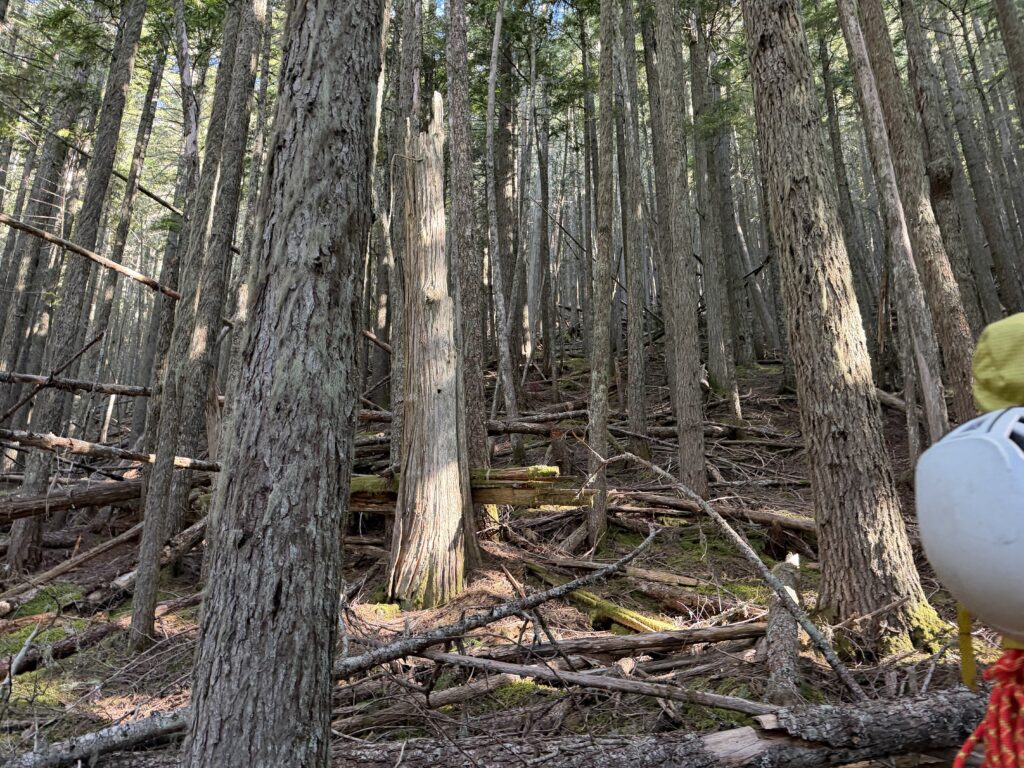
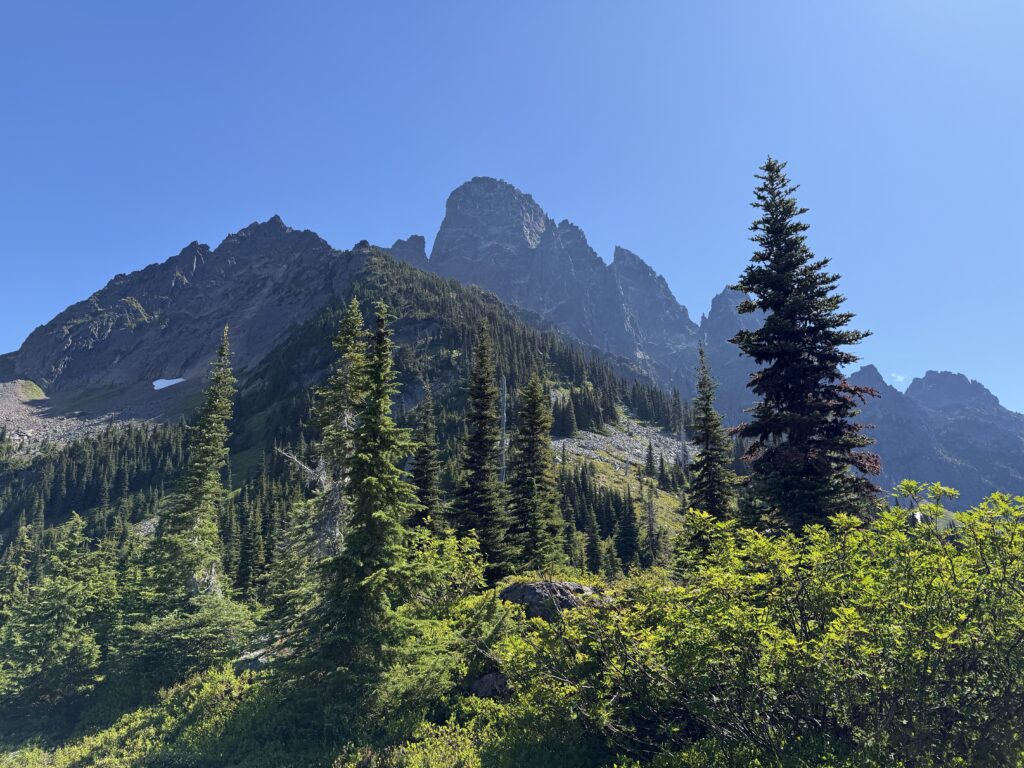
We hiked a little further to the boulder field on the west side of the summit tower and crossed it to gain the gully between Fraser Tower and the main summit. Another pair was ahead of us, but they were on their way to do the standard route so we didn’t have to fret. We finished up the approach at the top of the gully and started to suss out where our route actually started. Alex and Trevor seemed to identify the only obvious weakness that would make sense and so we geared up to climb that.
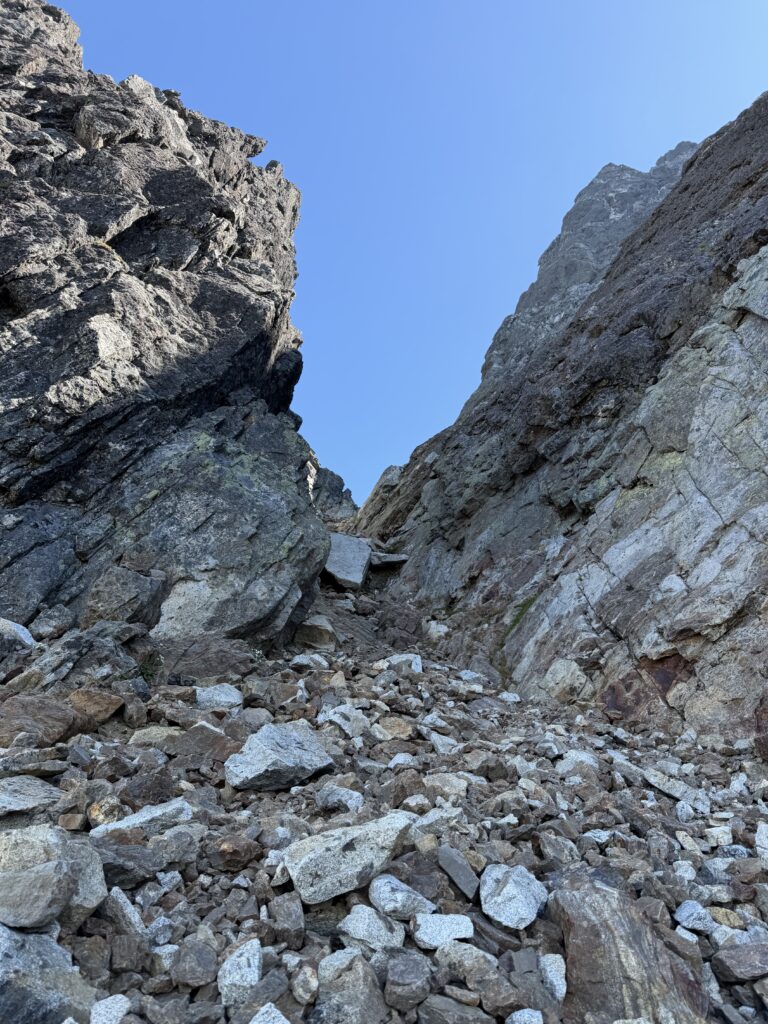
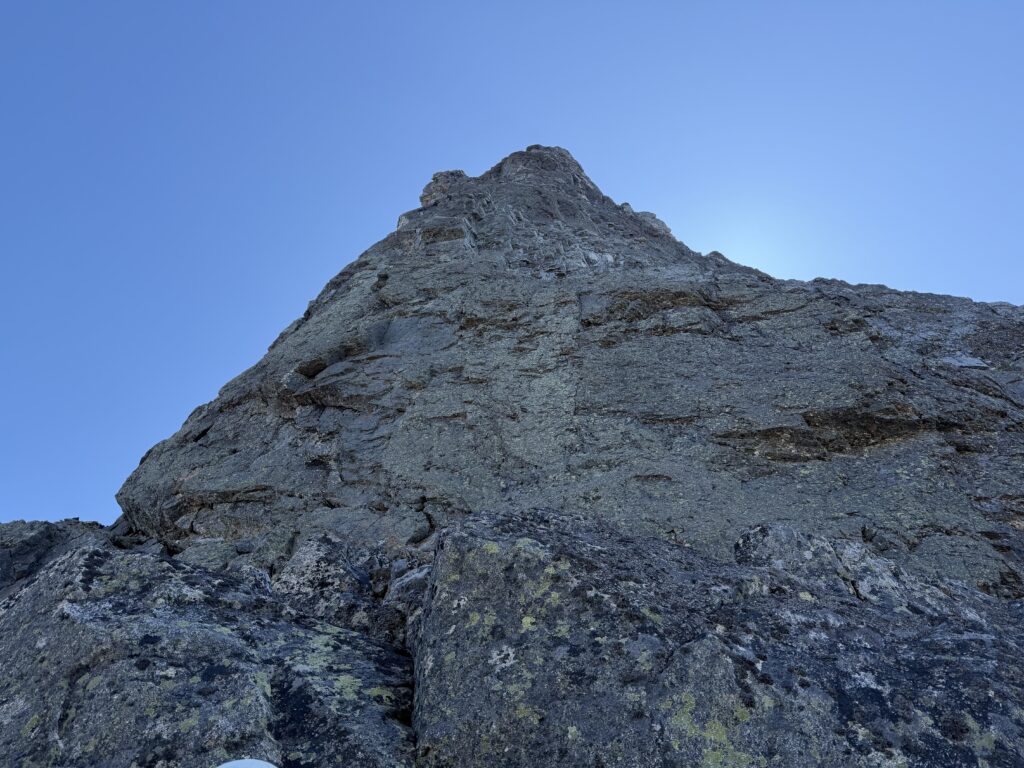
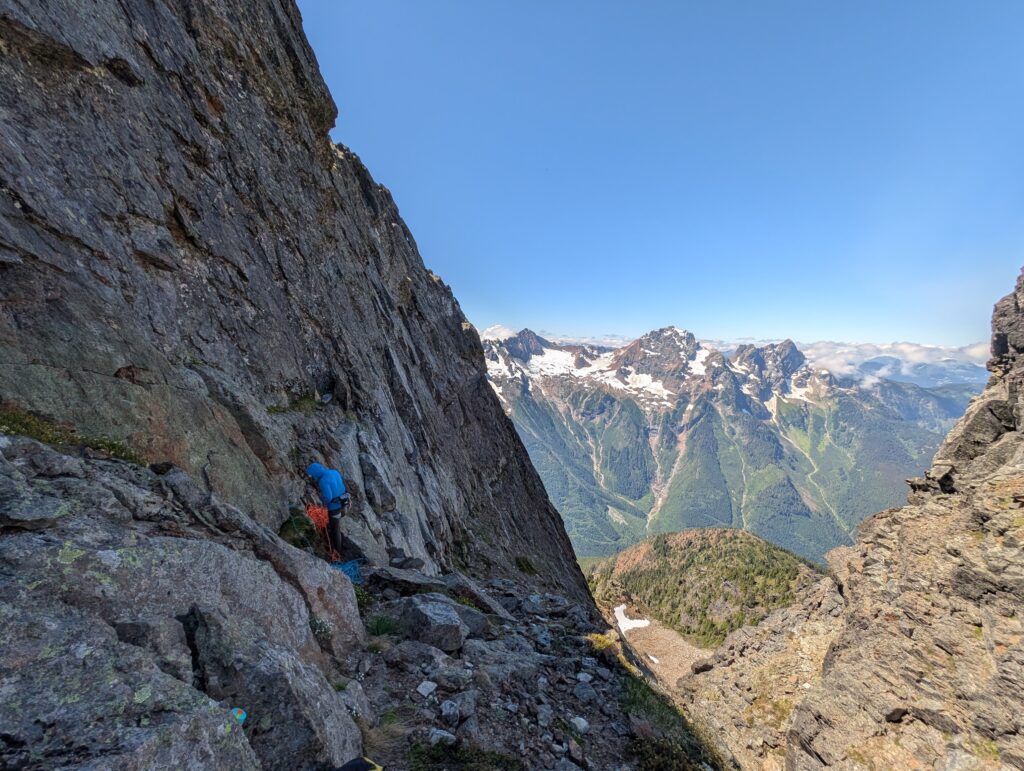
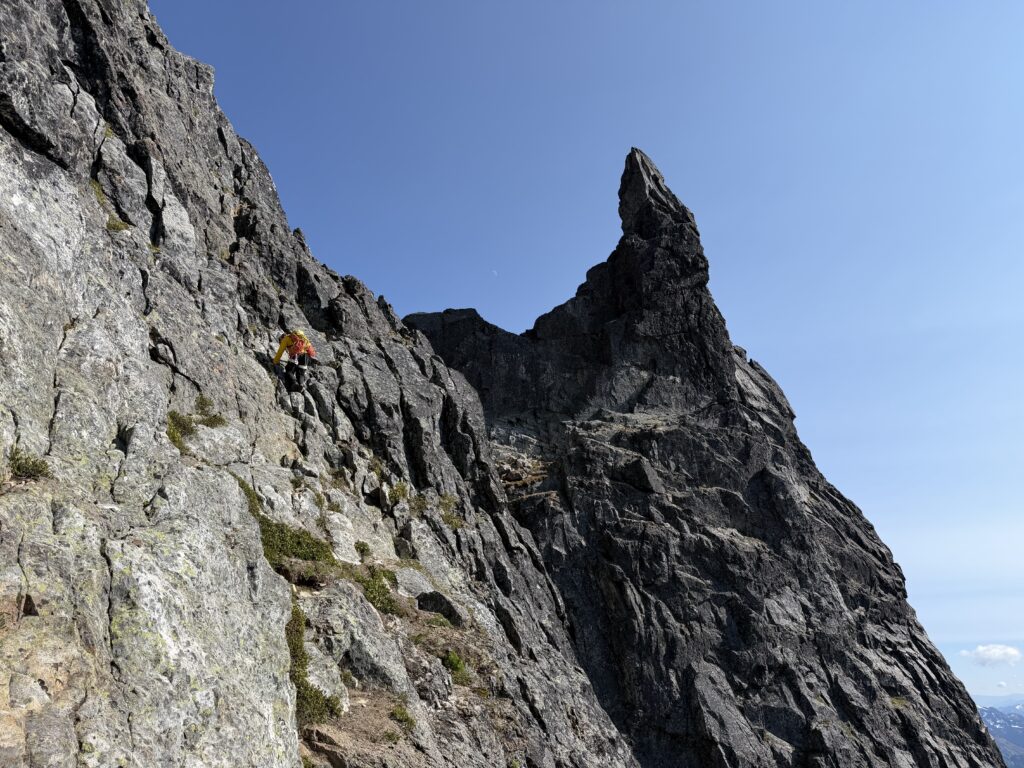
I lead first and find some nebulous protection for on untrustworthy rock, but the angle eased off about 15m up. From there I scrambled and climbed up some low 5th terrain at climber’s left to another corner system that looked like a plausible part of the route. Alex swung into the lead and traversed climber’s right above the corners and out onto the west face. It wasn’t clear where exactly to go, but we could see general weaknesses above us that threaded through the steeper walls all around. Trevor took the next lead and traversed out 10m and then straight up the face to the base of a steep gully/chimney.
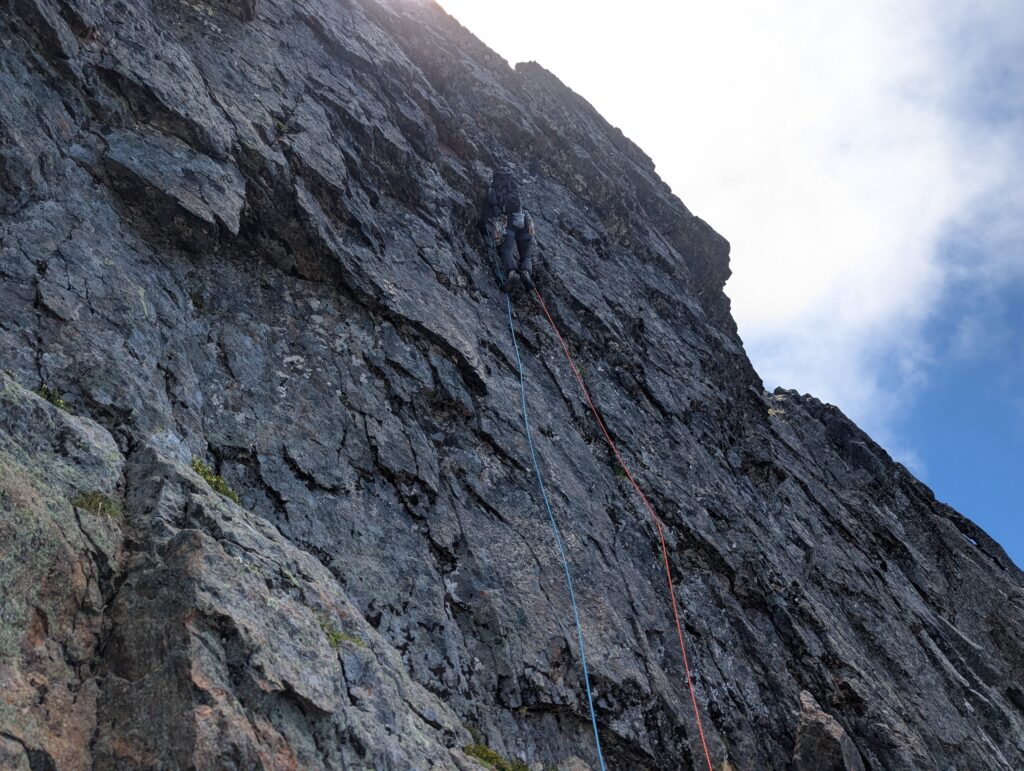
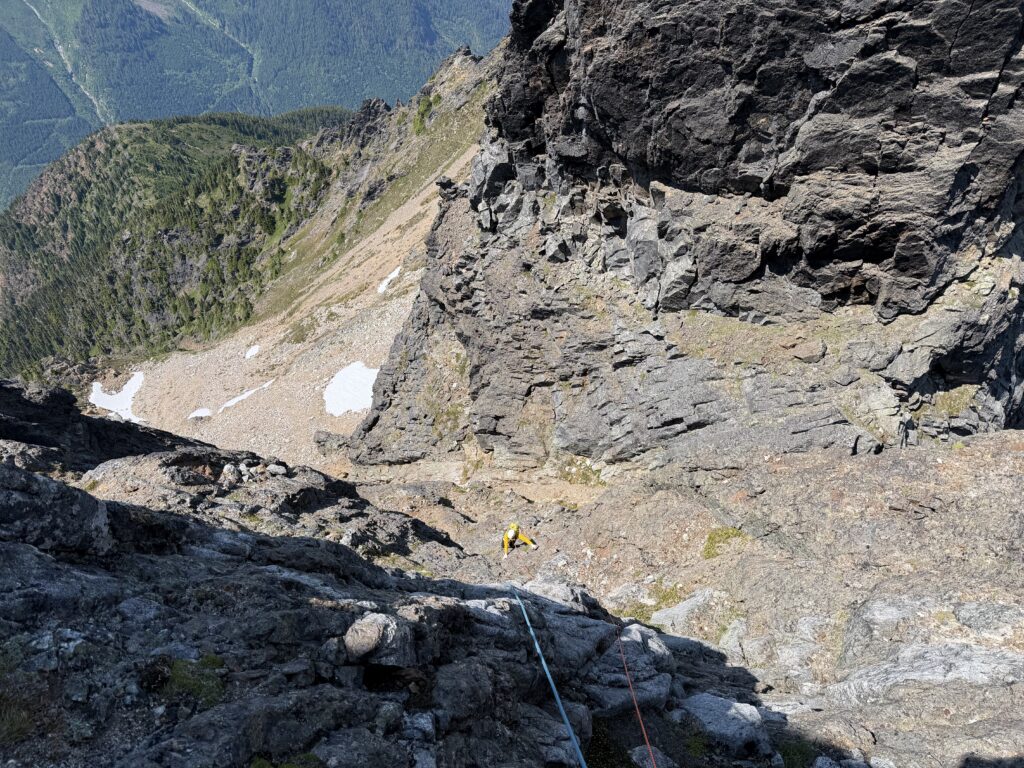
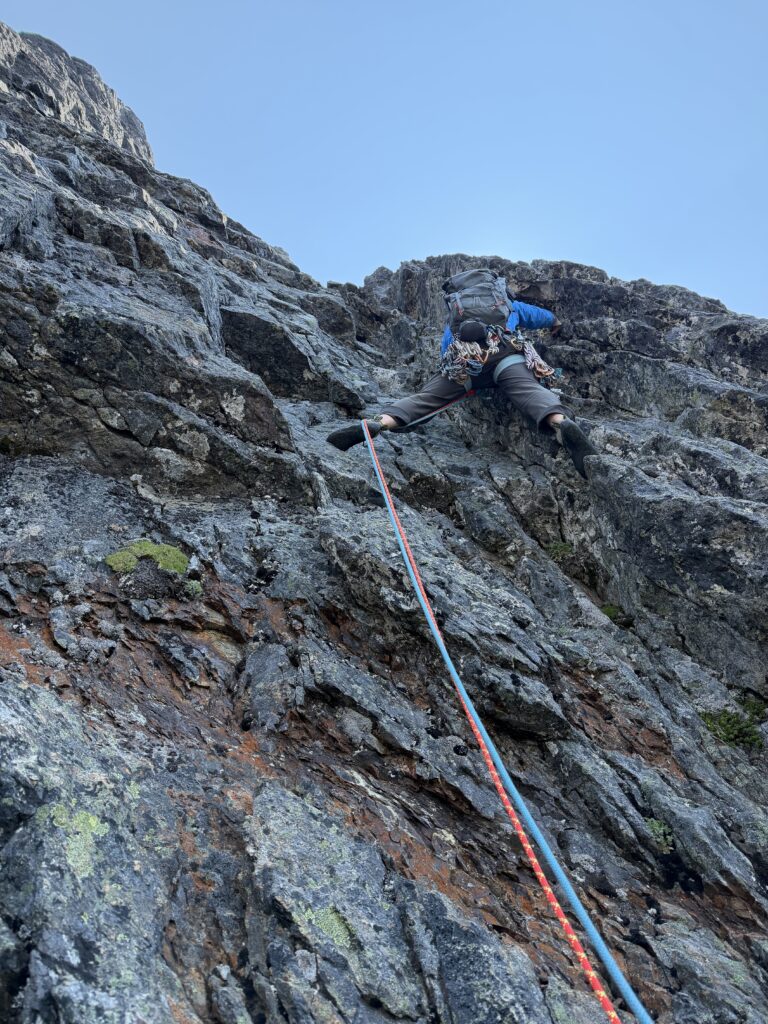
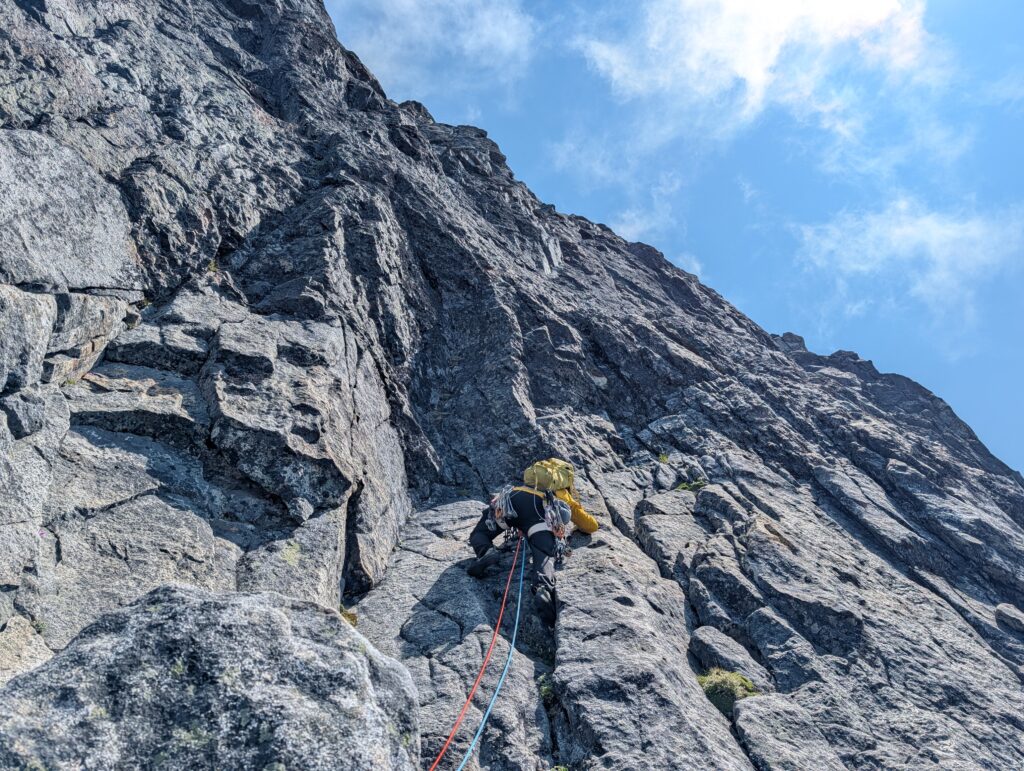
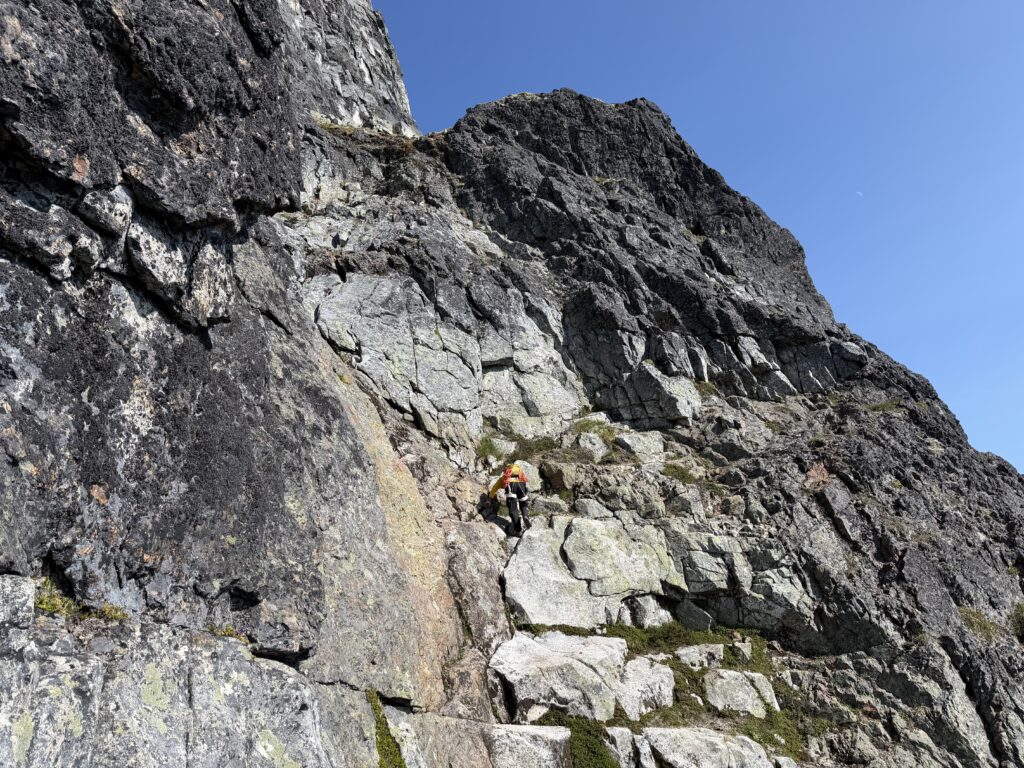
I took the next lead and climbed up through low 5th terrain with generally good gear and topped out with an interesting choice. To the left the terrain looked a bit easier, but also a lot looser. To the right the rock looked more granitic with crack systems, but much steeper. I elected to climb up through some run out face climbing to scope both options. In the end the granite one out and I was surely happy to have picked that. I found my way up a fantastic hand crack and then up through a channel of sorts with excellent stemming and protection. This topped out at a perfect belay ledge. I looked down at the alternative I had skipped and saw nothing but choss and poor protection. Much of the route had been strewn with bail gear or rappel tat and I was a little worried I get us marooned, but the terrain never exceeded 5.8.
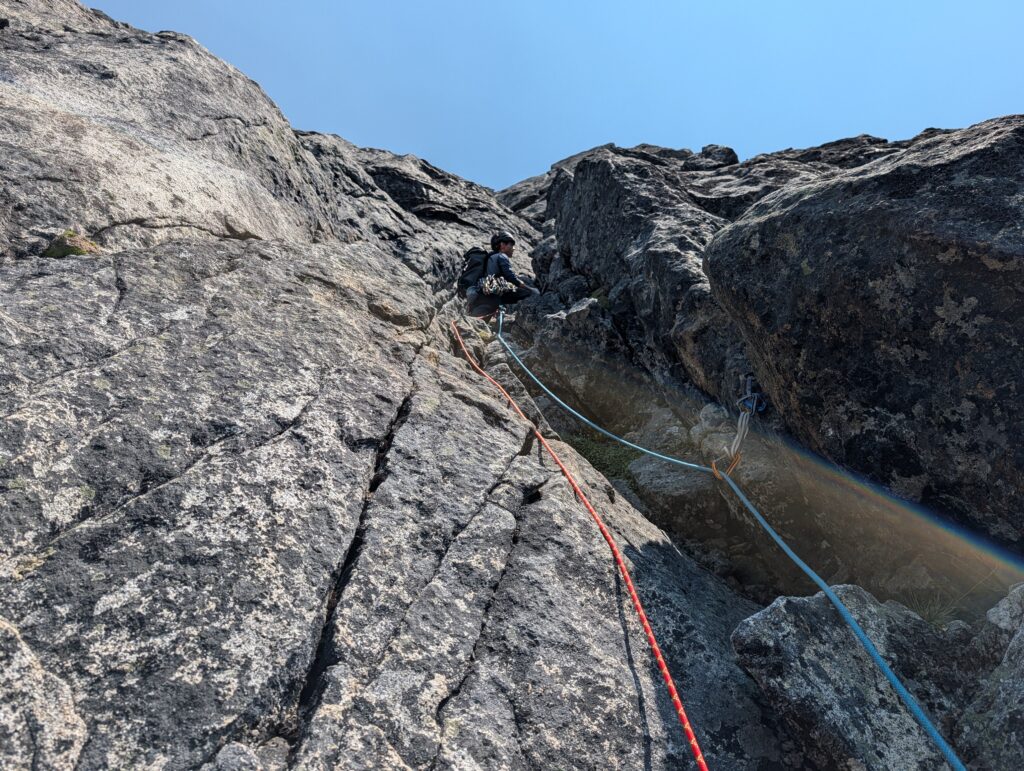
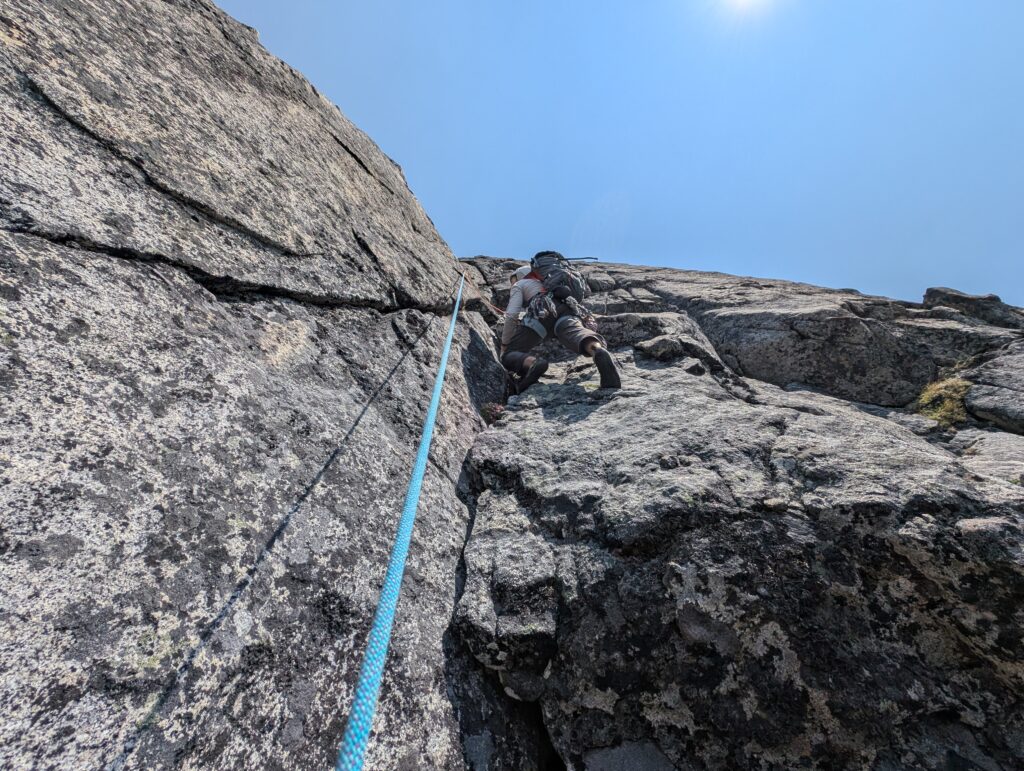
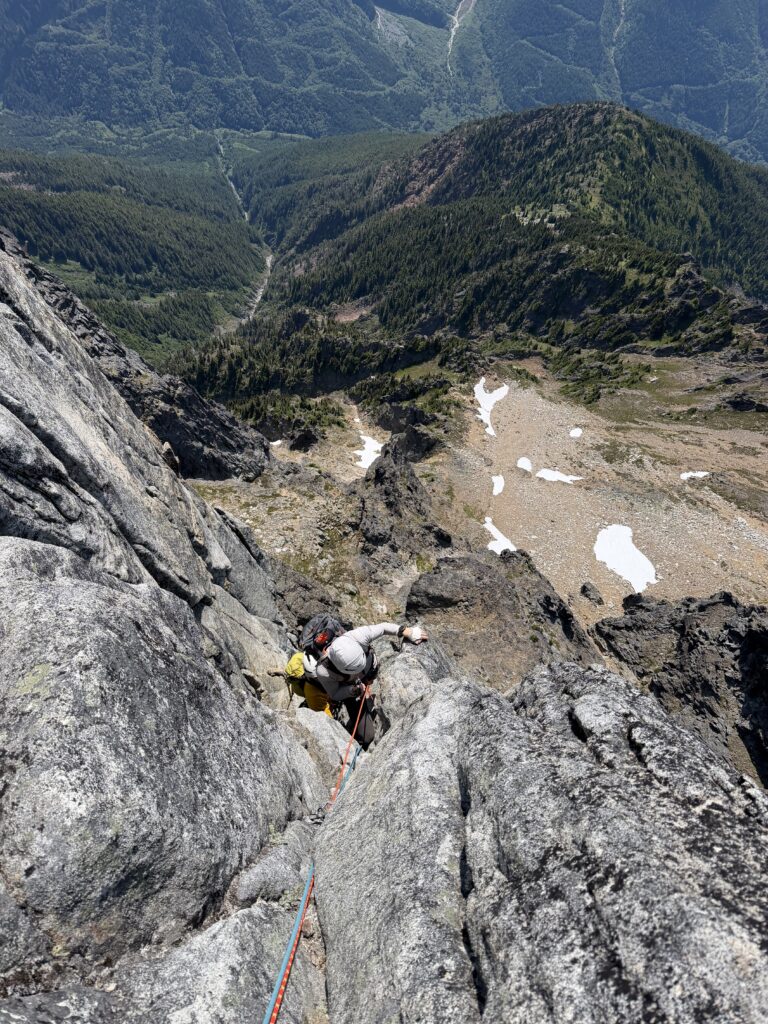
Alex took the fifth and final lead and it involved only one short set of moves through hand cracks before entering scrambling terrain. He brought us up to the northern most part of the summit and then we scrambled up to the true summit for some lunch.
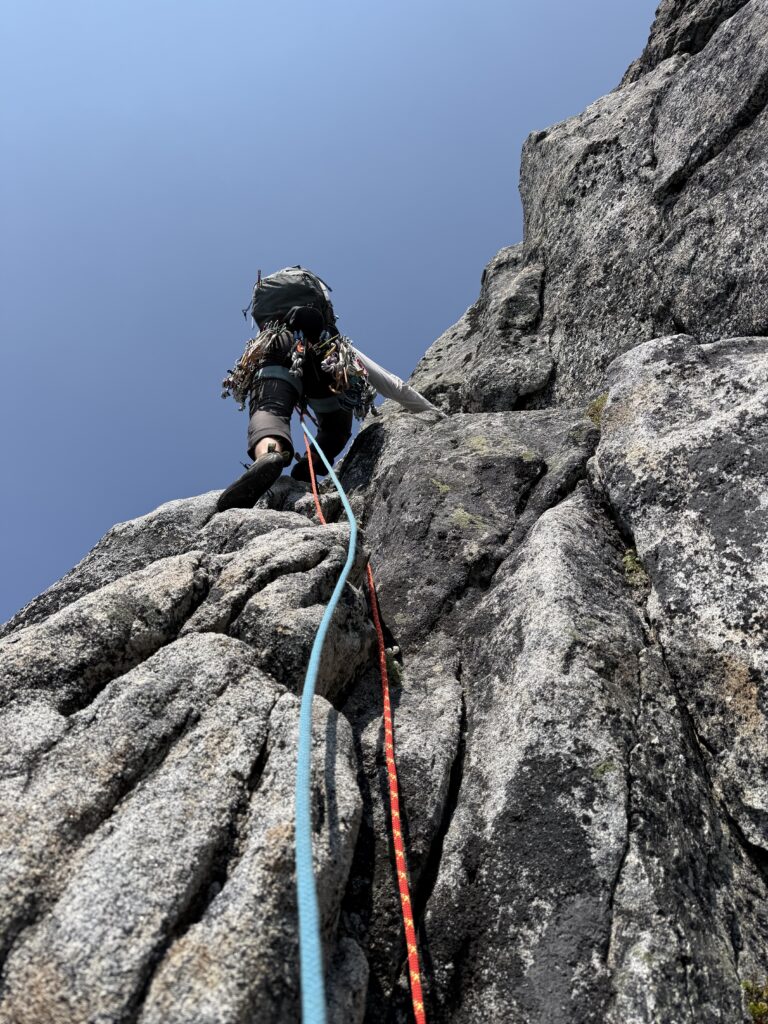
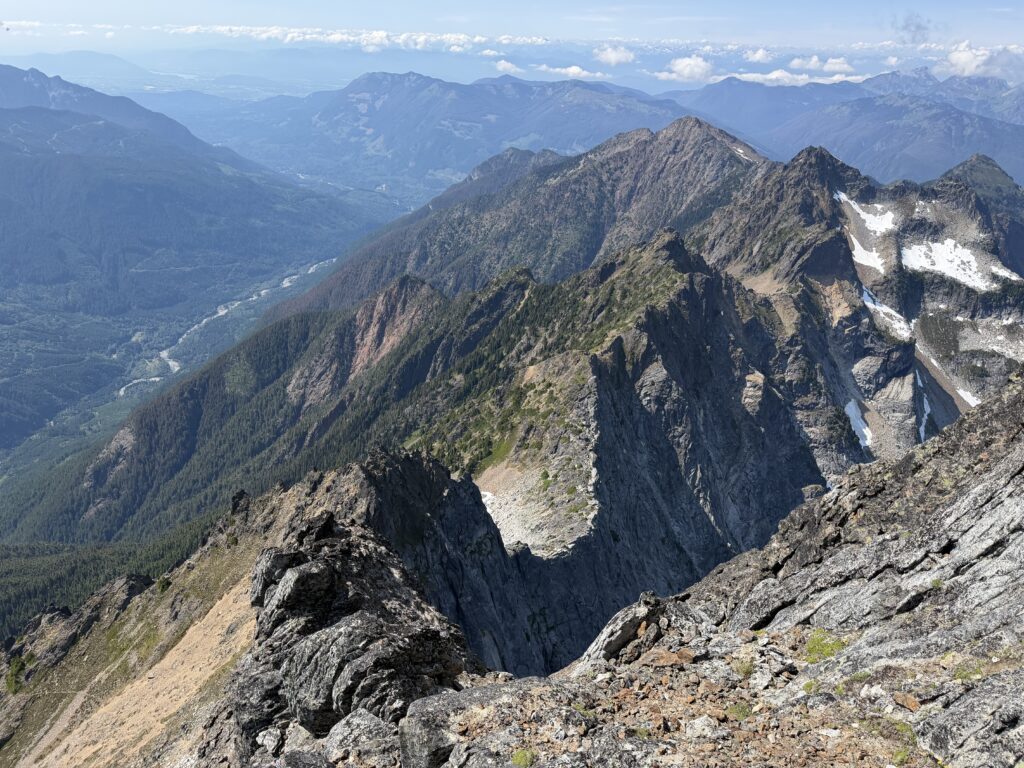
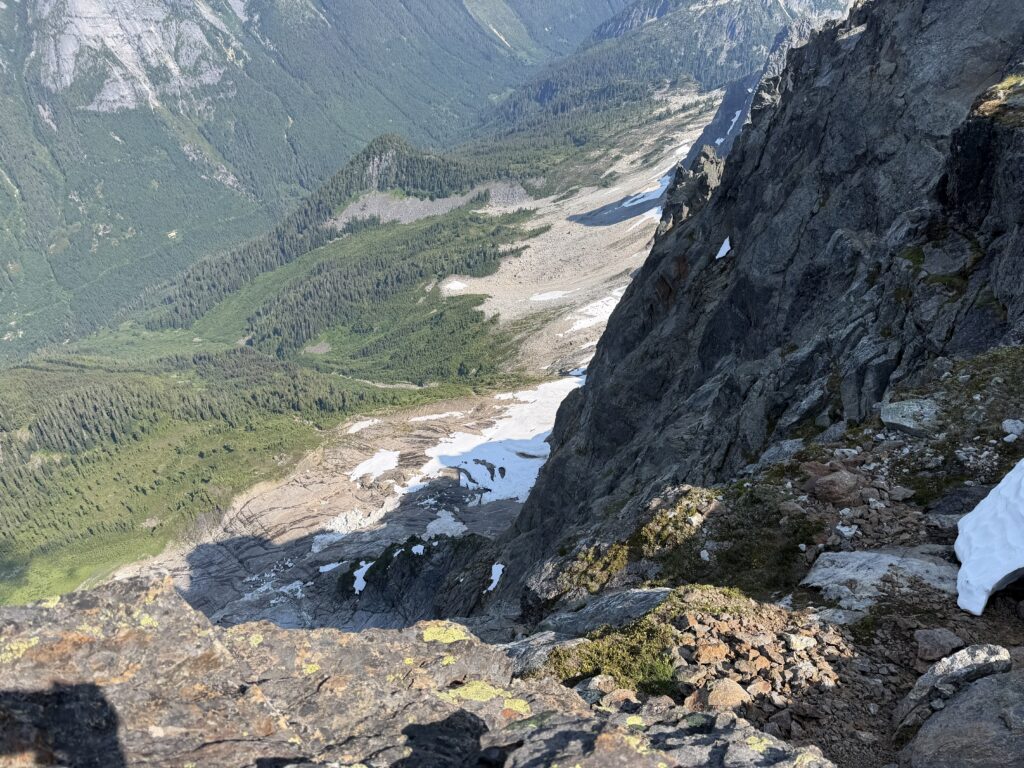
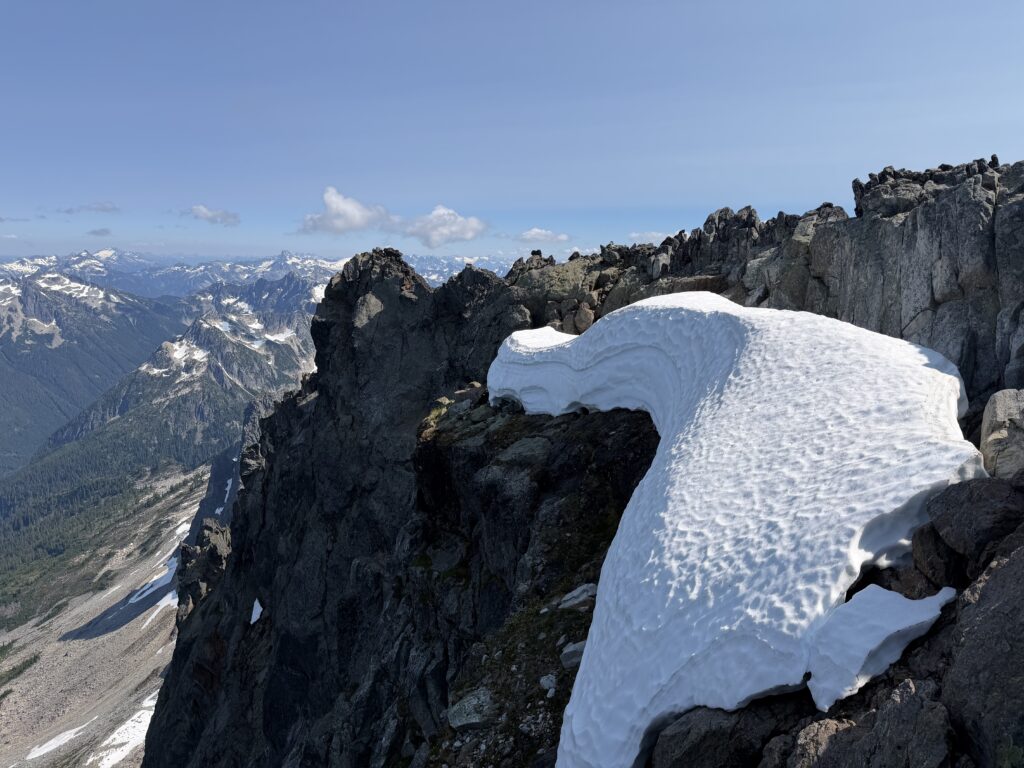
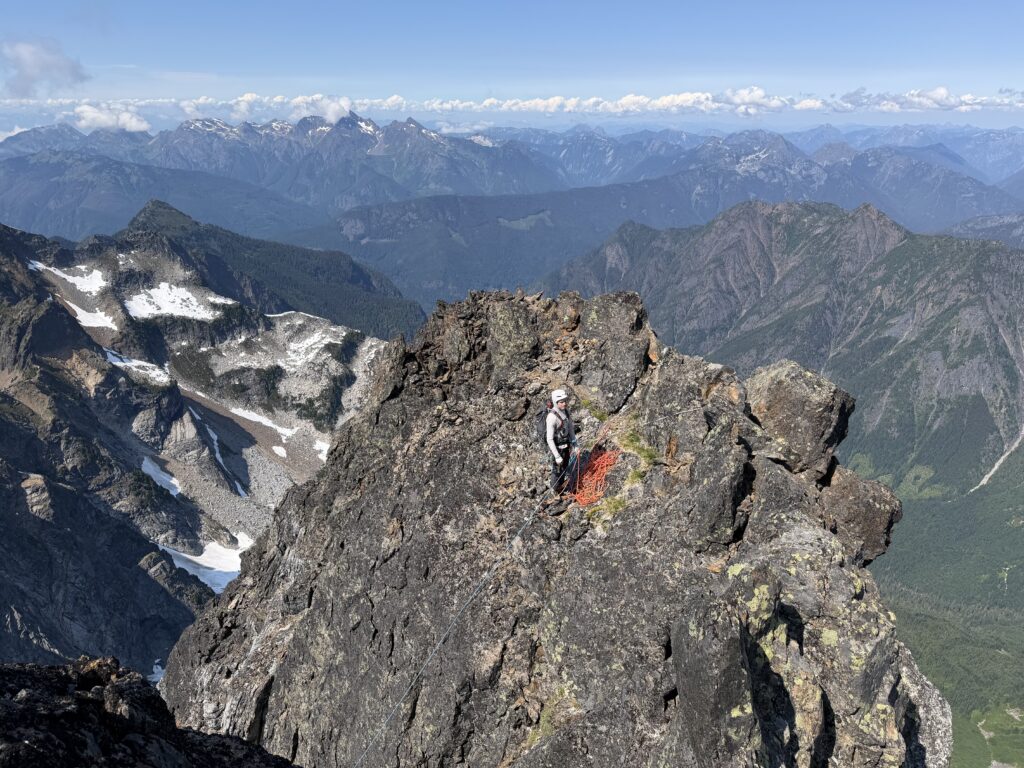
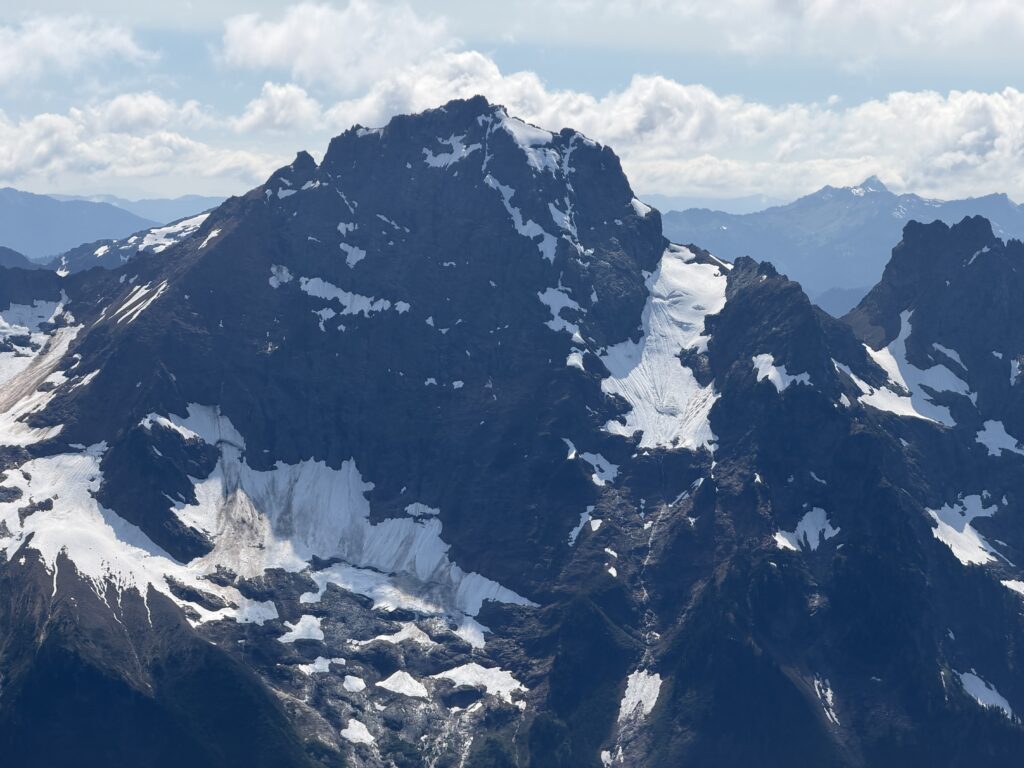
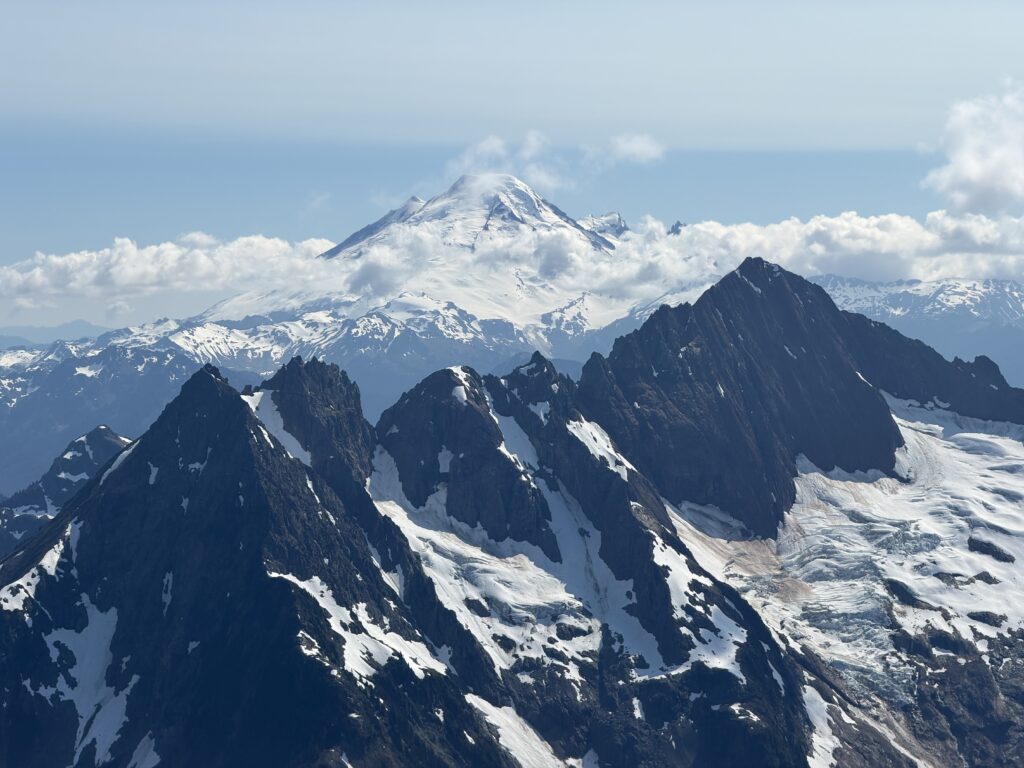
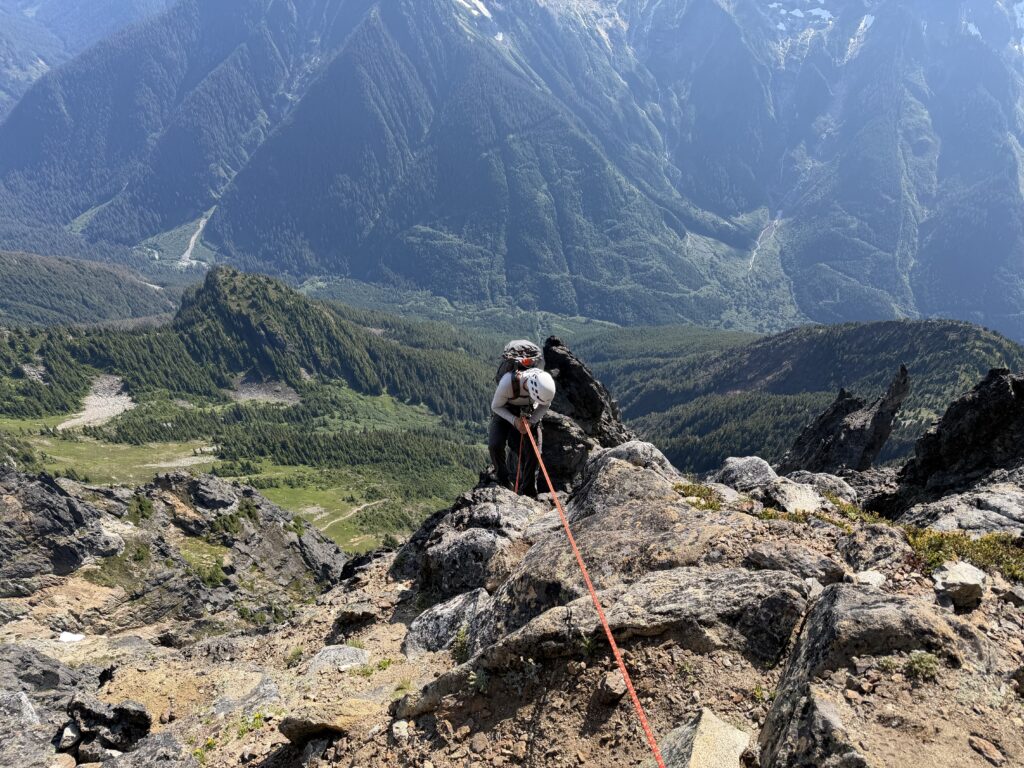
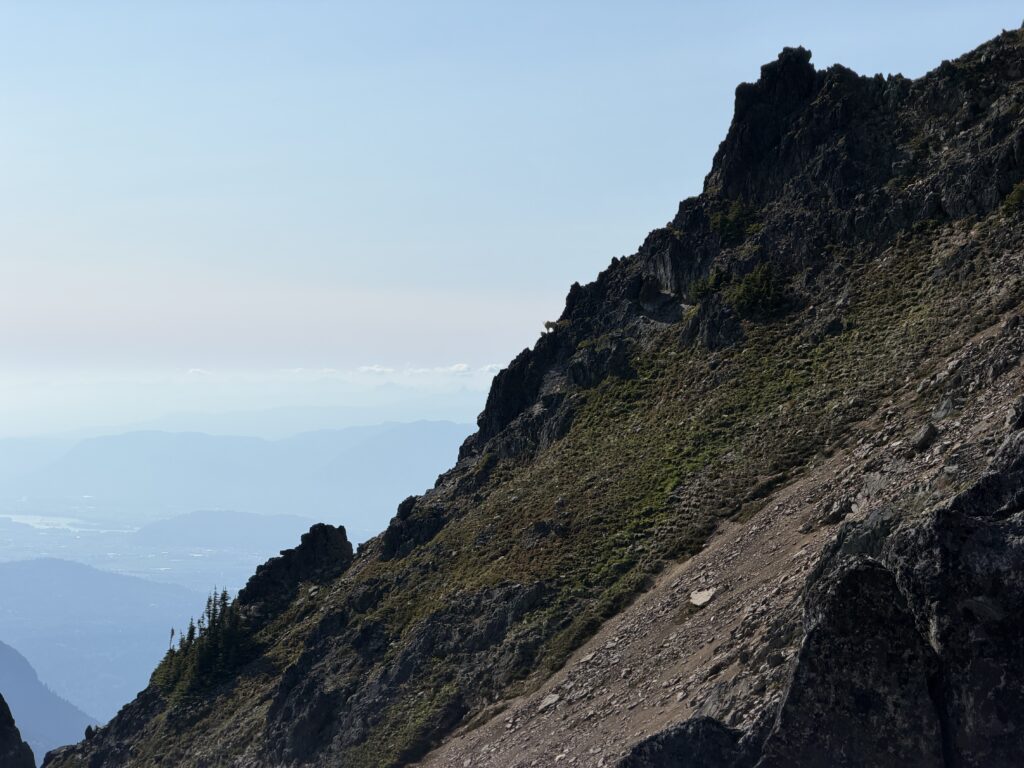
We then followed the standard route down. Some cairns took us to the first rappel and our rope was just shy of the bottom. We had to do some low 5th down climbing and then wrapped around towards the north side on ramps. Here we had to make a 4th class move across the face and then another rappel presented itself, but we elected to down climb instead. Finally a gully a little further skiers route was down climbed to reach benches the famous diving board rock. We down climbed this as well and that landed us back at our gear.
The descent was manageable, but the bushy road walking proved to be a bit tedious on return. Nonetheless it was a fine outing and great to be on more solid rock than The Table.